What Happens When a Garage Door Falls Short in Extreme Winds
A garage door looks ordinary right up till the weather turns violent. After that it turns into one of one of the most vital moving components in the building envelope. In severe winds, particularly during whirlwind problems, an unsuccessful garage door is rarely simply a regional fixing task. It can transform the stress inside a home, lift cladding, damages ceilings, and send out debris through locations that were never ever meant to take that sort of force.
On the Gold Coastline and across various other cyclone-prone components of Queensland, this is not a theoretical risk. It belongs to the style conversation. Garage doors are large openings in a wall surface, and if they are not constructed, installed, kept, and serviced to the right requirement, they can be the weak point that allows the weather in. As soon as that occurs, the damages frequently relocates rapidly from the garage to the remainder of the building.
The garage door is not simply a door
A lot of people consider the garage door as a panel that keeps cars secure and rainfall off the tools. That holds true in fair weather condition, yet in extreme winds the garage door acts more like an architectural barrier. It needs to resist pressure from the outside while staying secured right into the framework, with tracks, springs, cables, fasteners, and the opener all doing their part.
When the door fails, the repercussions can spread out fast. Queensland government guidance has actually made this level for several years: garage-door failure can bring about major damage to wall surfaces, ceilings, roofing cladding, and components. It can additionally produce hazardous wind-borne debris. That last point matters more than people anticipate. Once a door breaks apart or is torn away, the sheets, panels, sections, and equipment can end up being airborne hazards.
In a serious wind occasion, the door does not need to be totally destroyed to create difficulty. Often the failure begins with a single factor, such as the track coming loose, a springtime losing tension, or a section bending sufficient that the door no more seals. That tiny failure can let wind get in the garage, pressurise the room, and drive the next phase of damage.
What actually happens when winds get under a garage door
The series is commonly unsightly since it is mechanical and physical, not gradual. If wind forces its way inside, the garage comes to be a chamber. Pressure builds. The door can bow, vibrate, or pop out of its overviews. If the door is currently old, rusty, badly serviced, or otherwise suited to the wind area, the margin disappears quickly.
People often think of the garage door installation garage itself taking the full impact. In practice, the more comprehensive building is what spends for the failure. When wind pressure adjustments inside the house, roof components and wall surface linings are more at risk. Ceiling products can droop or stop working. Roofing cladding can loosen. Components in the garage, consisting of storage space units and tools, can be damaged by both wind and water intrusion.
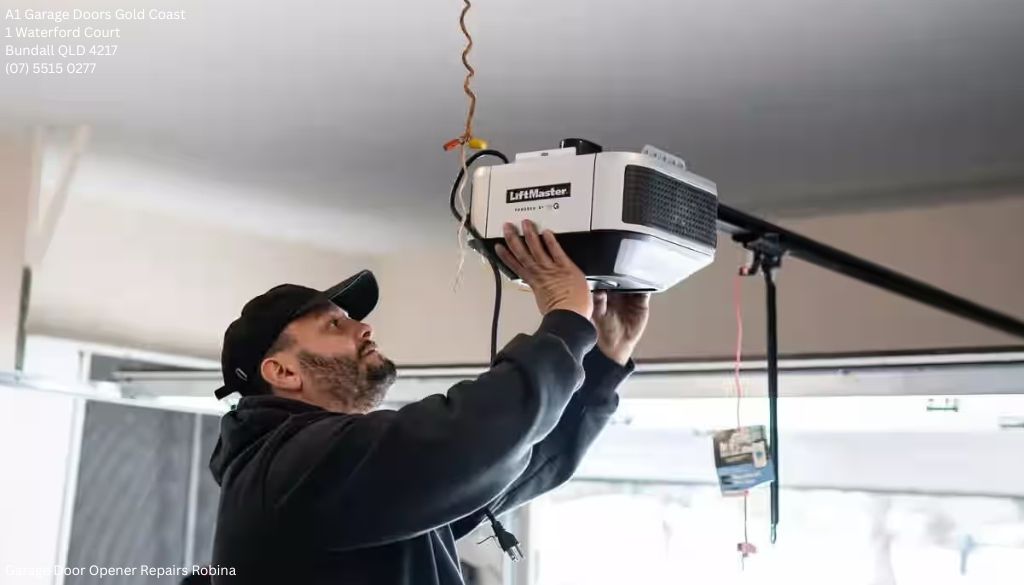
There is likewise a dangerous second result. A damaged door can release debris that strikes home windows, neighbouring residential property, or vehicles. In tornado problems, that becomes a safety problem as much as a home issue. I have actually seen instances where the real door damages was just the begin, and the costly component was everything the wind did after the opening was compromised.
Why conformity issues prior to the wind arrives
Garage doors in Queensland are not evaluated by guesswork in cyclone-prone locations. The pertinent standard is AS/NZS 4505, and Queensland Government advice specifies that doors mounted in affected areas because 2012 need to fulfill the wind-rated requirement. Older doors might not have adequate toughness for cyclonic winds, also if they looked penalty for years in normal weather.
That distinction is important. A garage door can work completely on a calm road for a very long time and still be a poor suitable for extreme wind exposure. Compliance is not just a documents problem. It is a proxy for whether the door was made and mounted with the regional risk in mind.
This is where garage door requirements come to be greater than a technological phrase. Requirement Australia keeps in mind that Australian Criteria are voluntary unless referenced by law. As soon as referenced by legislation or guideline, they can come to be compulsory. In Queensland, structure needs sit within a structure that consists of the National Building Code, the Queensland Development Code, the Building Act 1975, and the Structure Regulation 2021. For house owners and residential or commercial property supervisors, that suggests the pertinent requirement is not something to treat as optional suggestions if the residential property remains in a wind-rated area.
A door that was set up before the current requirement might still be functional in a day-to-day sense, but that is not the like appropriating for extreme wind. That gap matters most when the weather condition becomes extreme.
The age of the door informs only component of the story
Older doors are not instantly dangerous, but they should have examination. Some have actually had fixings, motor upgrades, or equipment changes over the years. Others have simply aged into a condition where corrosion, exhaustion, or inadequate maintenance has decreased their performance. A door that has actually seen seaside air, repeated tornados, and years of daily use will not behave like a fresh installation.
This is one reason repair service decisions are not always uncomplicated. A broken panel or curved track may look like a simple solution, however if the door is already outside its helpful wind-performance envelope, substitute may be the much more sensible alternative. That is specifically real in exposed locations where weather loading is a repeating concern, not a once-in-a-decade event.
In useful terms, a property owner requires to ask two inquiries. First, is the door still doing as made? Second, even if it is working now, is it the ideal door for the existing compliance and threat account of the building? Those are not identical questions.
Repair, replacement, and the factor where caution wins
There is a difference between a repair that brings back operation and a fixing that recovers durability. A door can sometimes be made to open and close once again after a problem, however that does not necessarily suggest it awaits extreme winds.
This is where commercial garage door fixings and expert residential work share the very same reasoning. The auto mechanic needs to look past the apparent mistake. Springs, cords, rollers, tracks, fasteners, joints, and motor elements all matter. If the failure was caused by impact, deterioration, water ingress, or repeated strain, the damages can extend beyond what shows up at a glance.
A good professional will likewise take into consideration whether the existing door type is appropriate. The Gold Coast market often contrasts roller, sectional, and tilt doors, and each has its very own toughness and trade-offs. Roller doors can be compact and practical, sectional doors can offer an extra refined fit and much better insulation alternatives, and tilt doors have their very own operating attributes. But none of those categories is immune to wind efficiency issues. The crucial question is not the style alone, it is whether the installed item is rated, maintained, and appropriate for the location.
If a door has already failed in wind, replacement can be the cleaner option, particularly if there is corrosion, duplicated solution background, or outdated equipment. Repair might buy time, however it is not constantly the very best risk decision.
The covert function of maintenance
A shocking number of garage door failings are not significant in the beginning. They begin silently. A spring loses performance. A cable television frays. A track drifts out of alignment. The opener starts to pressure. The door still functions, so the problem obtains ignored.
Regular expert servicing is one of the most basic ways to lower that threat. Gliderol's upkeep guidance states panel doors need to be oiled every 3 to 6 months and serviced every 2 years, with more constant attention for coastal residential or commercial properties. That is a practical tip, not marketing fluff. Salt air, humidity, and everyday wear reduce the life of relocating parts. On the shore, rust prevention is not optional house cleaning, it belongs to keeping the door usable.
Service intervals additionally matter for guarantee protection. Gliderol notes that failing to adhere to authorised maintenance intervals may impact service warranty security, especially for motorised parts. B&D similarly states that some household garage doors and openers bought with each other can carry a 10-year Overall Confidence Warranty, however just if the system is serviced within the first 12 months and afterwards at least every 2 years.
That informs you something important regarding modern-day garage-door systems. Manufacturers anticipate upkeep. They develop it into the product life process due to the fact that they know springtimes, motors, remotes, and security devices do not remain trusted for life without attention.
The opener belongs to the weather condition tale too
When individuals think about wind damage, they usually focus on the door fallen leave itself. The opener matters also. If the opener separates from the door, or if the door is not properly involved, the system might not behave as expected under tension. B&D's repairing guidance additionally notes that some typical problems can be as simple as a low remote battery, however it stresses that trained experts must handle repair services and servicing.
That recommendations sounds modest, however it is sound. A garage door system incorporates stored power, hefty relocating parts, and electric parts. Springs and cables are not locations for laid-back trial and error. In serious winds, a marginal opener or weak link can be component of the failure chain. If the door is not correctly secured, the best electric motor in the world will not make it wind-rated.
Some more recent openers consist of solution indication lights on chosen designs, which works since it gives the owner a signal that the system wants attention. That does not change examination, however it aids with timing. If the light is alerting that solution schedules, it is far better to take care of that before storm period, not after a wind event.
What homeowner typically observe before a failure
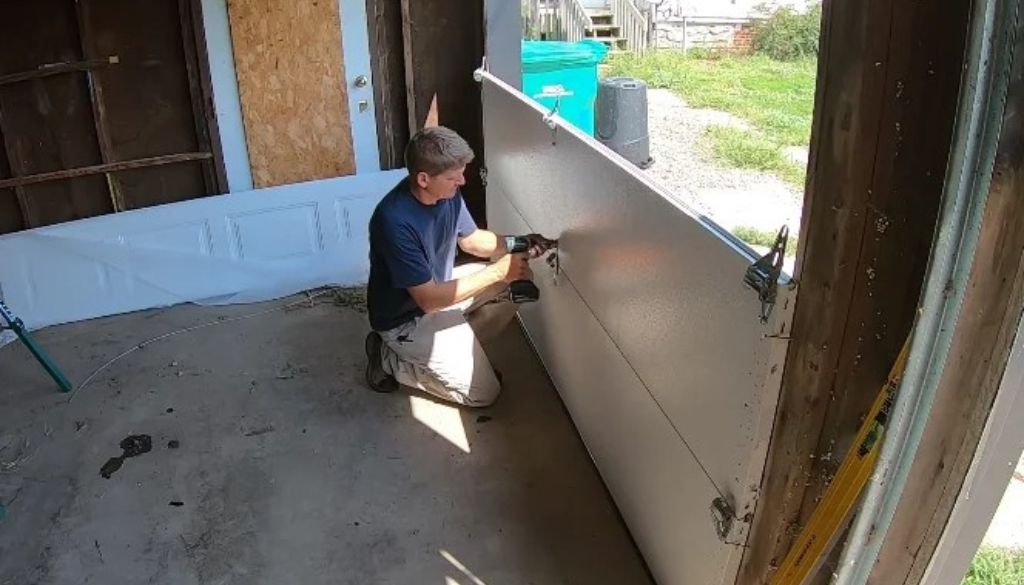
A garage door typically offers some caution, although not always much. The indicators are commonly refined. The door might sound harsher than it utilized to. It might wait midway. It may relocate erratically or appear to rub in one spot. In a coastal environment, rust around the bottom edge or hardware can be an early indication that the system needs closer attention.
The useful difficulty is that proprietors get utilized to these signs. They adapt to a door that is a little slower or a little noisier. That is understandable, but in a severe wind area, adaptation can end up being complacency. A door does not require to be significant to be unsafe. It only requires to lose enough strength or alignment that the following major wind event locates the weak spot.
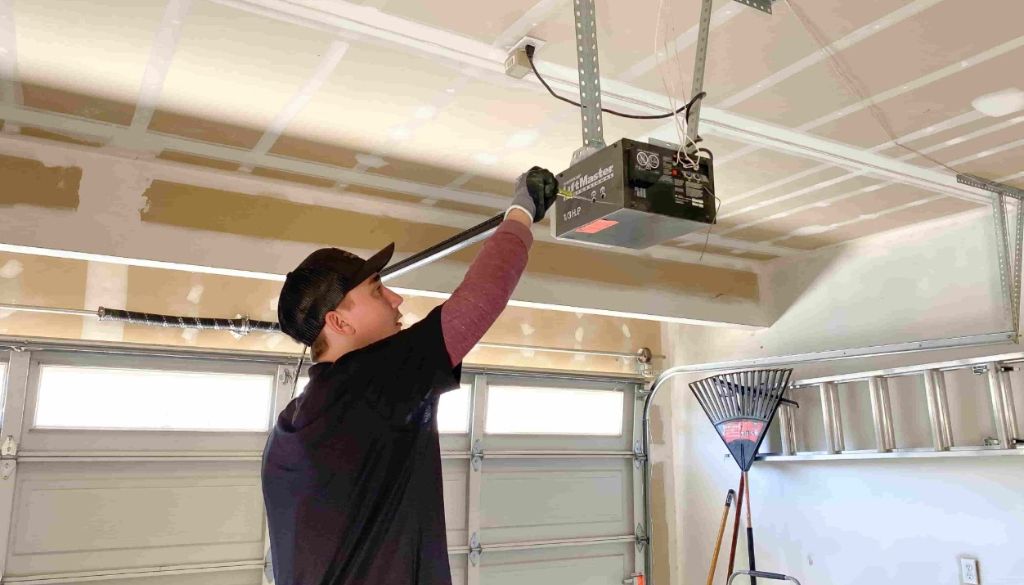
The best method is to treat any type of change in movement, audio, or securing as worth monitoring. Not every mistake implies substitute. Some are straightforward solution problems. But in a high-risk area, the assessment ought to be made by somebody who recognizes both the equipment and the conformity context.
Security, insulation, and storm durability are connected
It is very easy to consider garage doors in different groups: safety, insulation, appearance, and storm efficiency. In truth they overlap. A door that secures well, rests directly in its tracks, and is properly maintained is usually better all round. It is much less likely to rattle, much less likely to leakage, and less likely to fail under pressure.
Insulation might not be the first point people associate with serious winds, yet it matters in the larger image of structure performance. A well-fitted door can help regulate heat and reduce drafts, which is useful on the coastline where climate can swing from damp to warm to rainy. The very same fit that helps thermal best garage door repairs near me performance usually assists keep the system stable under wind loading.
Security matters too. A door that is currently deteriorated by wear or corrosion can be much easier to interfere with. After extreme climate, there is usually a scramble to secure residential or commercial properties, clear access, and analyze damage. A door that still operates effectively makes that procedure simpler.
Choosing the best feedback after a wind event
After a severe wind event, the temptation is to concentrate on what shows up. Busted panels, a bent track, a stuck opener, or a door that will not close correctly all demand interest. Yet the best response is normally a lot more determined than a quick patch.
A thorough examination need to consider the door structure, the equipment, the opener, and the bordering opening. Damage to the wall surface or structure can be equally as essential as damages to the door itself. If the door has been forced out of positioning, or if the repairing points have been jeopardized, an aesthetic fixing will not resolve the underlying issue.
There are truly 3 questions that matter after the storm.
- Is the door secure to operate?
- Is the door still matched to the website's wind requirements?
- Is repair enough, or has the system got to replacement territory?
Those questions audio simple, yet addressing them correctly takes experience. The most inexpensive choice is not constantly the ideal one, particularly when the next tornado season is currently on the calendar.
What owners in cyclone-prone areas should keep in mind
Queensland's structure structure is developed around real danger, not abstract concept. That is why the typical matters, why wind-rated installation issues, and why older doors are entitled to a cautious evaluation as opposed to a presumption of competence. In impacted areas, doors mounted given that 2012 are expected to meet the wind-rated requirement, and that expectation is there for a reason.
For property owners, strata supervisors, and commercial drivers, the practical takeaway is uncomplicated. Do not wait on an extreme wind advising to find out whether the garage door is up to the job. Inspect the service history, search for rust or motion problems, and see to it the door matches the property's exposure. If the residential or commercial property beings in a cyclone-prone component of Queensland, compliance with australian conformity for garage doors is not a box to tick and neglect. It belongs to keeping the structure undamaged when the weather turns.
And if a door is old, loud, patched together, or continuously repaired, it may be time to stop treating it as a small trouble. A garage door that falls short in severe winds can turn a convenient maintenance problem into a building-wide problem really promptly. That is why the ideal feedback is normally calm, early, and expert, not hurried after the first tornado warning has actually currently gone out.